A fire door visit should not begin with a hunt for keys
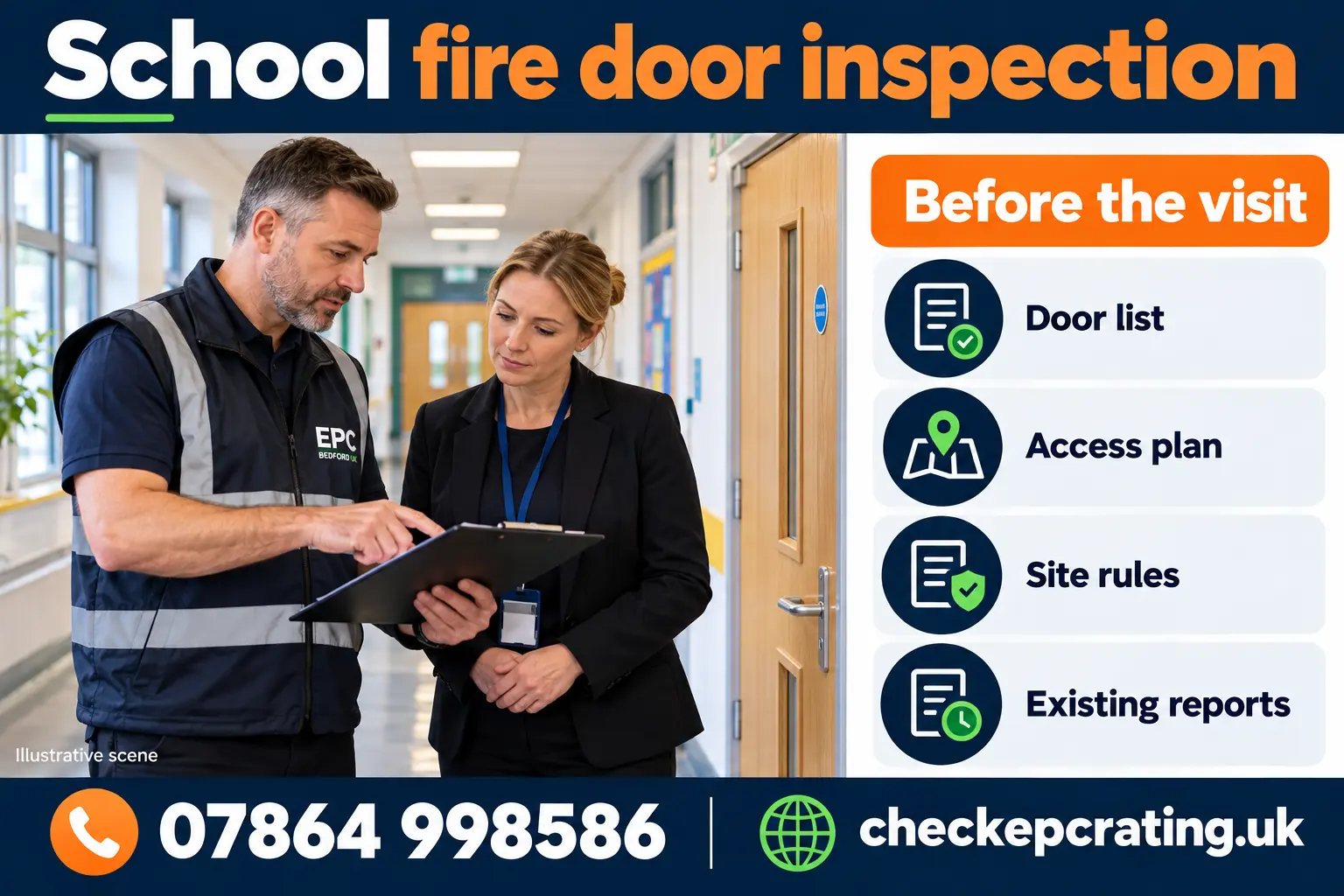
A carefully planned inspection can still lose useful time if rooms are locked, door identities are unclear or the escort has not been briefed.
For school business managers, site teams and estates staff, preparation is not about deciding the technical outcome in advance. It is about giving the agreed inspection scope the best chance of being completed safely, consistently and with clear records.
A familiar start-of-day problem
Illustrative scenario: A facilities manager at a fictional Bedfordshire school has arranged a visit covering two teaching blocks. The visitor signs in correctly, but nobody has a current door list. One corridor is being used for an exam, the plant-room key is elsewhere and several doors have no shared identifier. The inspector can record what is accessible, but the school may need a return visit or a separate plan for the missed areas.
The problem is not that every school needs the same timetable or report. It is that access assumptions were not settled before the visit. This example is hypothetical and is not a testimonial or a claim about work completed by EPC Bedford UK.
What the official guidance says
The Fire Safety Order is the main fire-safety legislation for non-domestic premises in England and Wales. Government guidance says the responsible person must carry out and regularly review a fire risk assessment, record it and put appropriate precautions in place. The Home Office publishes a specific guide for educational premises, while Department for Education guidance confirms that schools must use risk assessment to identify the precautions needed for occupants and safe escape.
Those duties do not create one universal marketing timetable for every school fire door. The appropriate checks, competence and frequency should follow the building, its fire risk assessment, relevant guidance and any identified concerns. Residential Regulation 10 frequencies for certain blocks of flats should not be copied automatically into a school plan.
Primary sources: Home Office educational-premises guide, Department for Education school fire-safety guidance and government fire-risk-assessment responsibilities.
School inspection preparation checklist
- Confirm the agreed scope. List the buildings, floors and door groups to be included. If the count is approximate, label it as an estimate and agree how additional doors will be handled.
- Prepare a usable door list. Bring any door register, location plan or previous identifiers. Do not invent identifiers on the morning of the visit without checking how they will be used in the report.
- Plan access around school activity. Identify exams, assemblies, occupied classrooms, kitchens, plant rooms and controlled areas. Agree who can unlock them and what happens if access is unavailable.
- Set safeguarding and visitor rules. Explain sign-in, identification, escort and movement requirements before arrival. The school remains responsible for its site arrangements.
- Share relevant records securely. Have the current fire risk assessment, earlier door reports, maintenance information and known concerns available to the authorised people. Avoid sending sensitive plans or personal data through public comments.
- Record changes since the last review. Note refurbishments, new partitions, replacement doors, altered closers or changes in use that may affect the agreed scope.
- Agree reporting expectations. Confirm whether the report will identify each door, show location references and photographs, describe limitations and separate observations from recommended next steps.
- Nominate a follow-up owner. Decide who will receive the report, ask questions, prioritise actions with the responsible person and retain the records.
Inspection is not fire-resistance certification
A condition inspection can record visible features and observations within its agreed scope. It is not automatically a destructive investigation, a laboratory fire-resistance test or a blanket certification that every door and every part of the building is compliant. The report should make its scope, evidence and limitations clear.
If markings, construction evidence or compatibility are uncertain, the appropriate next step may require manufacturer information, competent specialist advice or further investigation. A confident-looking label or photograph is not a substitute for the evidence required in the particular case.
Useful questions before arranging the visit
Does every school need the same fire door inspection frequency?
No universal schedule should be assumed for every educational building. The school should follow its fire risk assessment, applicable guidance, the building’s circumstances and any identified concerns. Residential Regulation 10 intervals apply to particular residential buildings, not automatically to schools.
Should the school close while doors are inspected?
That depends on the scope, site layout and school arrangements. Plan access with the provider and the school’s responsible staff. Do not promise that all doors can be inspected during teaching time without understanding safeguarding, exams and room use.
Do we need an exact door count before asking for a quote?
An honest estimate can start the conversation. State which buildings and door groups you intend to include, then ask how the final count, inaccessible doors and repeat attendance would affect the scope and price.
What records should be ready?
Where available, prepare the current fire risk assessment, door register, relevant plans, earlier reports, maintenance records and a note of known concerns or alterations. Share sensitive material only through an appropriate authorised route.
Can the caretaker or site manager escort the inspector?
That may be appropriate if the school authorises it and the person understands the access plan, keys and site rules. Responsibility for safeguarding and site control stays with the school.
What if a room cannot be accessed?
The report should identify the limitation rather than imply the door was inspected. Agree whether another access window or separate visit is needed and how that would be priced.
Does the inspection include repairs?
Do not assume so. Confirm whether the proposal covers inspection and reporting only, and whether remedial work, parts, certification or follow-up checks would be separately scoped.
Will the report certify the fire resistance of each door?
A visual condition inspection is not a fire-resistance test. Ask what evidence the report uses, what it can conclude and what remains outside scope. Further investigation may be needed where evidence is incomplete.
Which areas can EPC Bedford UK consider?
Enquiries are welcomed from Bedfordshire, Cambridgeshire and Hertfordshire. Provide the exact postcode, building count, approximate door count and preferred access window so coverage, travel, scope and availability can be confirmed.
Planning a school or institutional visit?
Send the postcode, number of buildings, approximate door count and access restrictions. EPC Bedford UK can discuss the enquiry and confirm the proposed scope, quote and availability.
Request a scoped quote Call 07864 998586
WhatsApp: 07864 998586.
Related reading: fire door quote checklist · fire door inspections in Bedford · services for agents and property managers.